Enter a zero-lash measurement
The calculator will compare standard 0.025-inch pushrod lengths against the selected lifter preload range.
MEASURE · CALCULATE · VERIFY
How to measure pushrod length on a Gen V LT
The calculator needs one number from the engine: the checking-pushrod length at zero lash. It adds the preload afterward. The hard part is getting that zero-lash measurement without accidentally collapsing the lifter.Zero lash is the point where the vertical clearance in the valvetrain has just been removed but the hydraulic-lifter plunger has not started moving. The pushrod may still rotate between your fingers. Use up-and-down clearance as the check instead of waiting for the pushrod to become difficult to spin.
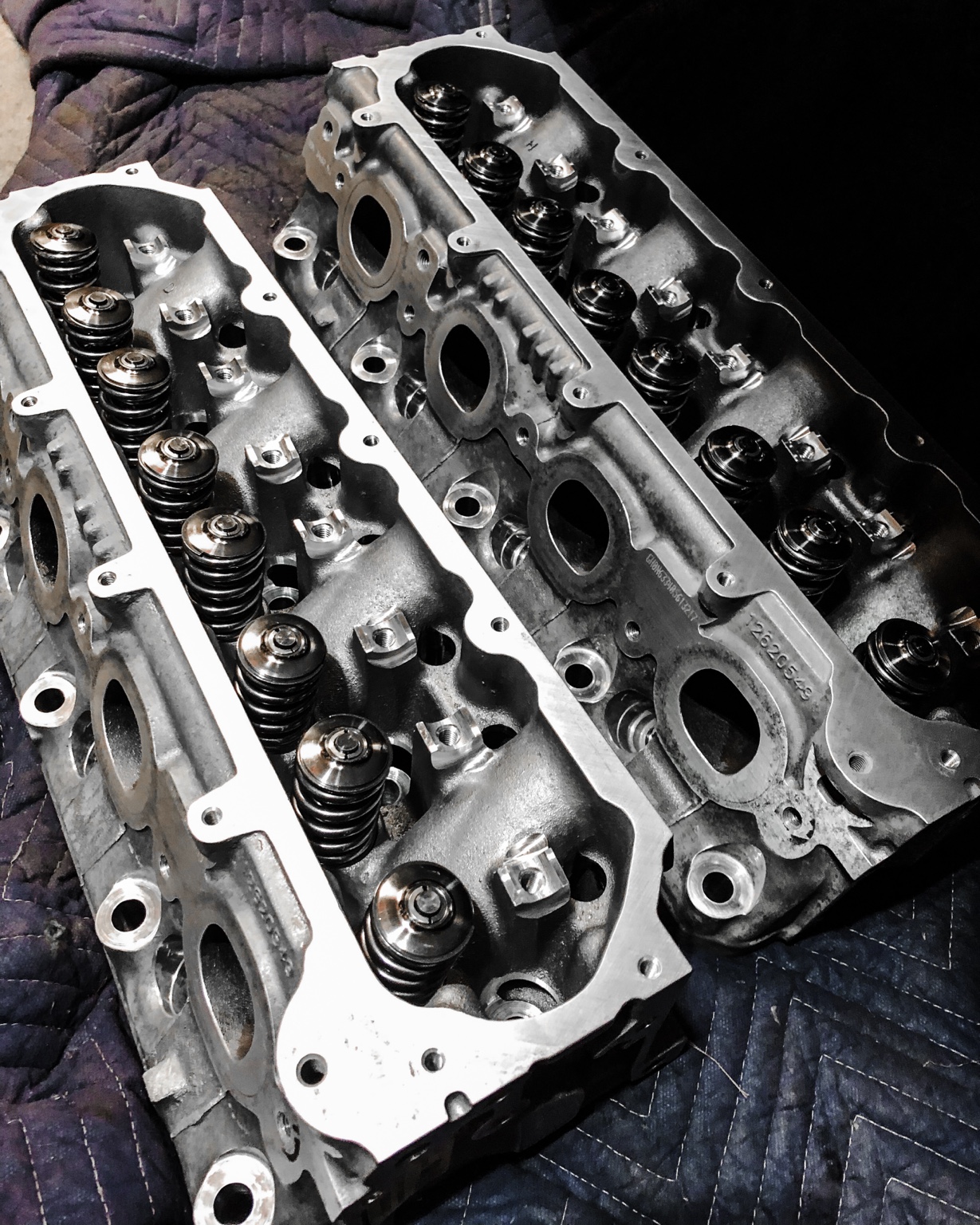
Measure with the cam, lifter, head gasket, cylinder head, valve and rocker that will run in the engine. Head milling, valve work, gasket thickness, cam base circle and lifter design can all change the answer.
Use the EO/IC method instead of assuming that both lifters are on the base circle at TDC. When the exhaust just begins to open, measure the intake. When the intake has opened and is almost closed, measure the exhaust. See the full base-circle procedure →
Shorten the adjustable checker enough that the rocker can be installed without opening the valve or depressing the lifter. Make sure both ends are seated correctly, then install the rocker in its normal fully seated position.
Gently extend the checker while feeling for vertical movement. Stop as soon as the up-and-down clearance disappears. Do not keep extending it into the lifter plunger. If the checker cannot be adjusted in place, remove, adjust and reinstall it in small steps.
Lock the adjuster without changing its length, remove it and measure it using the checker manufacturer's method. Repeat the measurement until you can reproduce it. A 12-inch caliper is useful for checking overall tip-to-tip length.
Enter the measured zero-lash length above and select the actual lifter or its specified preload range. The calculator adds preload and shows the resulting preload for each available 0.025-inch nominal pushrod length.
WORKED EXAMPLE
7.815 zero lash + 0.035 preload = 7.850 nominal
If the checker measures 7.815 inches at zero lash and the lifter target is 0.035 inch, the calculated pushrod length is 7.850 inches. Enter 7.815 in the calculator. Do not add preload before entering the measurement or it will be added twice.
HOW MANY SHOULD YOU CHECK?
One reading is a quick answer. More readings show the variation.
At minimum, compare more than one intake and exhaust position before ordering. Use the all-16 mode when the heads or block have been machined, the valves have been worked, installed heights vary or you simply want to know what every position will see.CHECKER LENGTH WARNING
Calibrated length and caliper length may not match
The size printed on a checking pushrod may be a nominal or calibrated reference, not its exact tip-to-tip measurement. Verify the checker at a known setting before using turns or markings, and confirm how the pushrod manufacturer defines its advertised length. Do not mix two different measurement conventions.COMMON MISTAKES
What usually throws the measurement off
- Measuring while the lifter is still on a cam lobe instead of the base circle
- Starting with the checker too long and depressing the lifter while installing the rocker
- Using pushrod rotational drag as the only indication of zero lash
- Adding preload to the checker and then letting the calculator add it again
- Assuming the checker's stated collapsed length exactly matches a caliper measurement
- Copying a pushrod length from another engine without measuring this one
MEASUREMENT TOOLS
Two adjustable-checker options and a caliper long enough to measure them.MEASURE FIRST. Presets are reference ranges, not permission to skip the lifter manufacturer's instructions. If the manufacturer specifies a different range for your exact lifter or application, use that specification. The broader L83/L86 cam-swap parts list covers the other hardware and measurements worth checking before the truck comes apart.
Technical background: lifter preload and plunger-travel principles cross-checked against Gwatney Performance Innovation's hydraulic-lifter preload guidance. Preset values remain tied to the lifter families identified above.